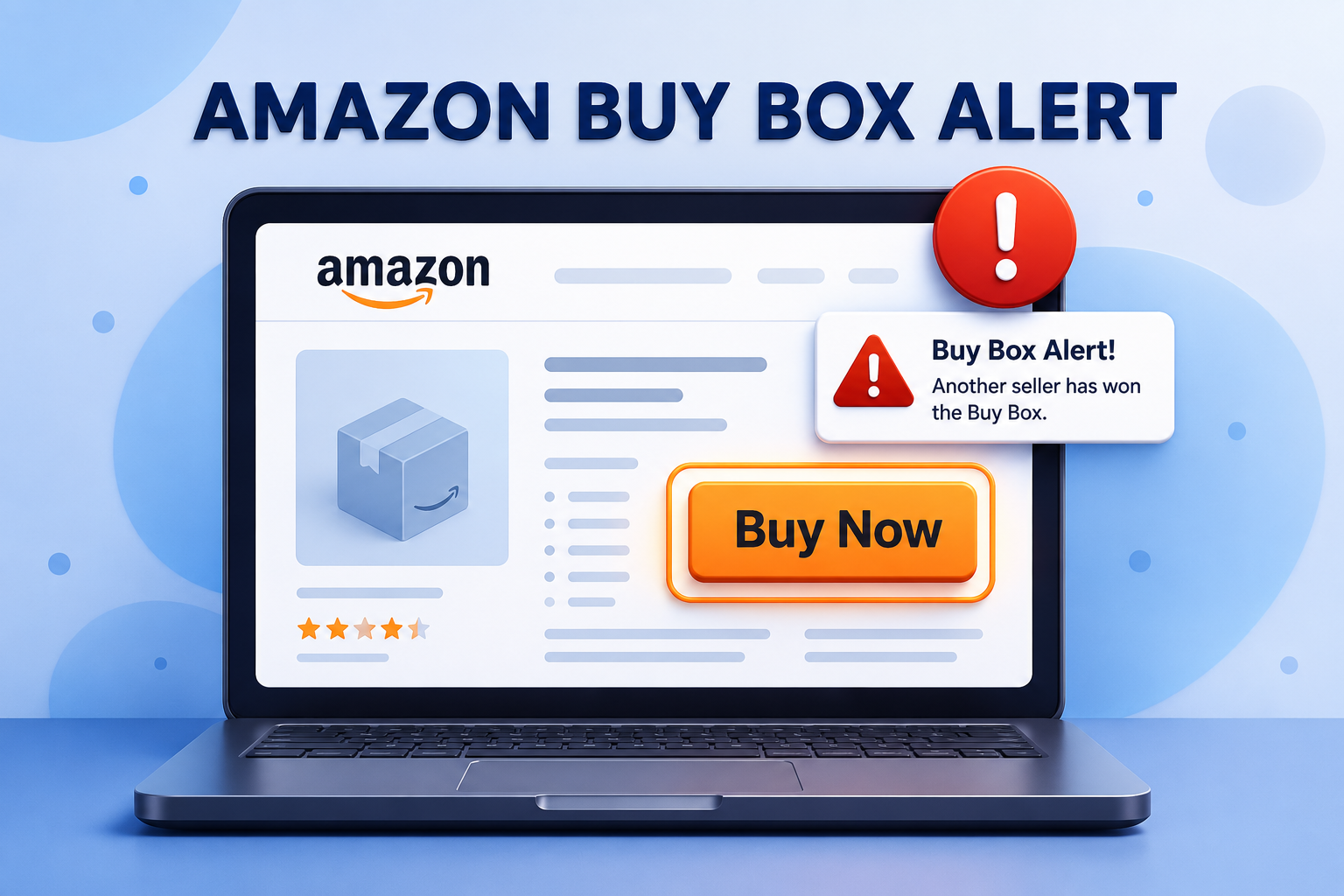
The Business Need
The seller needed Buy Box visibility before revenue was already lost.
The client managed a large, multi-marketplace Amazon catalog spanning more than 50,000 products and had no proactive way to identify Buy Box ownership changes. Losses were usually discovered only after sales reports showed a decline, which meant the operations team was reacting late and revenue was already impacted.
The goal was to create an automated Buy Box monitoring system using Amazon SP-API that could track the right products, respect Amazon API constraints, and notify stakeholders immediately when critical products lost the Buy Box.
Challenges we faced
Five interconnected problems had to be solved together.
The scale of the catalog combined with Amazon's API constraints posed a significant challenge. Amazon did not provide a centralized real-time dashboard for Buy Box ownership across the full catalog. Buy Box losses were often noticed days later, after sales reports had already shown a decline.
Tracking ownership manually was impossible because of catalog size and constant marketplace changes. The system also had to ignore inactive, suppressed, stranded, and other non-sellable products while monitoring every SKU at a frequency that would otherwise consume SP-API quotas, slow processing, and delay critical alerts.
How we solved the problem
A smarter monitoring strategy focused API capacity on the products that mattered most.
Amazon Guy delivered a completely automated Buy Box monitoring platform focused on the products that mattered most to revenue. The solution had four major components working together as a single system.
An intelligent product qualification engine prioritized SKUs by sales velocity, revenue contribution, inventory availability, advertising spend, Buy Box history, and marketplace activity—ensuring inactive or non-sellable products were excluded from monitoring.
A tier-based monitoring engine continuously evaluated Buy Box ownership for prioritized products. Critical products were checked every 15 minutes, growth products hourly, and long-tail products once or twice daily. This approach preserved near real-time visibility for revenue-critical SKUs without exhausting API capacity.
An intelligent alert framework notified stakeholders immediately when high-priority products lost the Buy Box. Alerts included SKU details, marketplace, current Buy Box status, timestamp, and product priority so teams could respond quickly.
A dedicated rate-limit optimization layer managed dynamic throttling, automatic retries, backoff, priority queues, and marketplace-specific workloads while staying compliant with Amazon SP-API limits. The platform used the Product Pricing API for Buy Box signals, Catalog Items and Listings APIs for product qualification, and the Notifications API as part of the alerting workflow.
Results
Faster detection, lower API consumption, and stronger revenue protection.
The automated approach ensured Buy Box ownership changes were detected in minutes rather than days for revenue-critical products. Priority-based scheduling reduced unnecessary SP-API calls by approximately 85%, while manual monitoring effort dropped by over 90%. The platform scaled to monitor more than 50,000 products across multiple marketplaces.
The challenge was not simply detecting Buy Box ownership changes. The real challenge was building a scalable monitoring solution that stayed within Amazon SP-API rate limits while focusing on products that mattered most to the business.
- 50K+ products monitored at scale
- Minutes Buy Box loss detection for critical SKUs
- 85% approximate reduction in API consumption
- 90%+ manual monitoring effort eliminated